

Engineering Activities
Within the Engineering Department, projects are structured around three complementary areas: Business Information Systems, Industrial Control Systems, and Scientific Software.
This organisation reflects CODRA’s ability to address complex technical challenges across a wide range of scientific and industrial contexts, while maintaining a consistent level of engineering quality.
Control systems
CODRA designs and develops complex industrial control systems for large-scale scientific or industrial installations, as well as test benches at laboratory or process.
The control and command systems developed by CODRA operate either as supervisory systems or as equipment-level controllers, corresponding respectively to levels 3 and 2 of the CIM pyramid. In both cases, CODRA leverages its strong expertise in controlling large numbers of heterogeneous devices, industrial communication protocols, network architectures, and system integration.
The test benches developed by CODRA are used for monitoring, control or supervision of scientific experiments, industrial processes or mechanical systems deployed over heterogeneous machine networks, notably in material handling and logistics environments. They rely on the same technologies as operational control systems, but are applied closer to the equipment, in a validation or qualification context rather than in production operation.
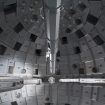
Laser Mégajoule (CEA)
Development of the control system for the Laser Mégajoule (LMJ), a large-scale physics facility used to study, at laboratory scale, the effects of nuclear deterrence on materials.

SAS2 (RTE)
Modernisation of the SAS (Alert and Backup System), a system dedicated to coordinating actions in the event of large-scale failures or network overloads.
Business information systems
In industrial and scientific environments, CODRA has developed strong expertise in the design and development of bespoke business information systems. These systems have two defining characteristics:
- They are fully custom-built and fall outside the scope of off-the-shelf solutions such as MES or SCADA products),
- They meet very high reliability and sustainability requirements, as they support critical parts of the customer’s core business.
© Lesbats Stephane (2019). Navire océanographique Thalassa. https://image.ifremer.fr/data/00617/72934/
CODRA has in-depth expertise in the communication protocols commonly used in industrial contexts (OPC UA, IEC 61850, IEC 60870-5-104, etc.) as well as in scientific environments (TANGO, EPICS). This expertise allows us to design information systems that integrate seamlessly with complex technical infrastructures.
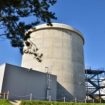
CADEEX (EDF)
Maintenance of CADEEX, a system used to store and manage the results of experimental tests performed on EDF’s production facilities.
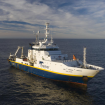
SIH (IFREMER)
Maintenance of the Fisheries Information System (SIH), a software platform dedicated to fisheries data management.
DOSIP (IRSN)
Redesign of dosimeter management tools, including the main application and a dedicated web portal.
scientific software
CODRA designs and develops software solutions dedicated to scientific research, either through the redesign of existing applications or through greenfield developments.
Three main categories of scientific software are addressed:
- computation codes,
- numerical simulation software,
- data processing and visualisation applications.
The resulting applications are highly diverse and cover a wide range of scientific use cases, including seismic and radiological data processing chains, atmospheric transport modelling, or simulation tools for fault prediction in electrical distribution.
Thanks to their dual expertise in software engineering and applied sciences, CODRA’s engineers are fully familiar with the scientific approach. They work on a daily basis with engineers and researchers from many scientific domains, including optics, laser physics, plasma physics, neutronics, visible and X-ray imaging, seismology, radiation protection and electrical engineering. This broad scientific culture is a key asset that enables CODRA to rapidly engage with new domains and complex problem spaces.

CIVA RT (CEA)
Redesign of the software platform dedicated to non-destructive testing (NDT).

DataLab (CEA)
Development of DataLab, a generic signal and image processing platform.
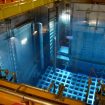
CRESUS (IRSN)
Development of the pycresus software, a unified and homogeneous database shared by several stakeholders involved in nuclear reactor safety.