In the industrial sector, a SCADA (Supervisory Control and Data Acquisition) system is no longer limited to displaying HMIs and alarms. Modern SCADA systems must contextualise events, cross-reference internal data (sensors, PLCs, historians) with external data (energy, weather, regulations) and trigger actions in third-party systems (CMMS, reporting, energy platforms). This is precisely where REST web services play a key role: they enable a SCADA application to consume and publish information in a standardised, secure and scalable manner. Beyond the technology, the challenge is operational: effective monitoring means having the right data at the right time, and being able to share it between stakeholders and tools.
Understanding REST: a simple, standard and interoperable API
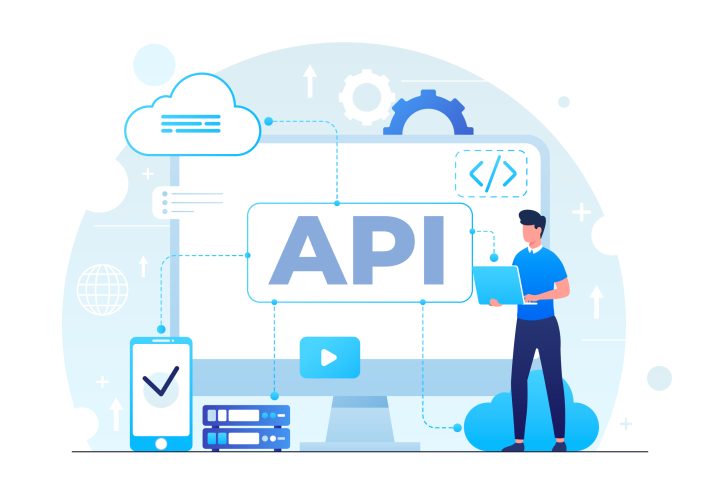
A REST web service (often called a REST API) is an interface that allows two systems to exchange data via the HTTP/HTTPS protocol. In most cases, exchanges take place in JSON (sometimes in XML), which facilitates integration with IT applications, cloud services and analytical tools.
REST relies in particular on well-known HTTP methods, which structure the exchanges:
- GET: read/retrieve data (e.g. fetch a weather forecast, a price, a measurement)
- POST: send/create data (e.g. transmit consumption data, publish an event)
- PUT: replace/update data (e.g. update a configuration)
- DELETE: delete data (less common in SCADA, but useful for certain management operations)
This simple and universal framework explains why REST has become a standard for connecting SCADA to its ecosystem.
Why REST web services are essential in SCADA
Integrating REST web services into a SCADA application brings very tangible benefits:
- Enriching monitoring with external data
The value of an HMI increases when it incorporates context: weather, energy prices , network signals, regulatory information. This data helps to interpret alarms, anticipate deviations and optimise decisions. - Breaking down silos in field data
Data collected by SCADA and the Historian should not be confined to the monitoring tool. Via REST, it can feed into portals, energy platforms, reporting tools or business applications. - Accelerating IT/OT integration
REST facilitates interoperability between the industrial (OT) and IT worlds, drawing on widely adopted standards. This reduces project complexity and improves the sustainability of architectures. - Improving responsiveness and automation
A SCADA application does more than just monitor: it can take action. REST exchanges enable workflows to be triggered, indicators to be sent, or information to be synchronised with third-party systems.
Panorama: using REST web services to exchange data
With Panorama (an MES/SCADA/Historian platform published by Codra), REST integration is supported by a dedicated feature:
- Panorama’s REST WebService function enables an application to use REST web services to exchange data.
- It includes the REST WebService Client object, which allows HTTP requests (GET, POST, PUT, DELETE) to be sent to a web server from an application script, and the received responses to be processed.
Key point for monitoring: Panorama can communicate via REST in both directions:
- Receive external information (weather, energy, telemetry, repositories, etc.) to enrich synoptic views, alarms and Historian analyses.
- Send information from the application (consumption, KPIs, operational statuses, calculated indicators, events) to third-party services (reporting, compliance, energy portals, information systems).
This bidirectional capability makes SCADA a true operational hub: it integrates context, consolidates field data and redistributes it to the right systems at the right time.
Panorama use case: Météo France (regional weather)
For stakeholders in the water cycle (production, transmission, distribution, wastewater treatment, stormwater management), weather is essential information : rain, storms, frost, heatwaves or droughts have a direct impact on flow rates, volumes, quality and the operation of infrastructure.
In a Panorama application, using a weather service allows you, for example, to:
- link alarms and operational events to a weather event,
- anticipate hydraulic overloads or the risk of overflow,
- put Historian trends (flow rates, turbidity, levels) into context with weather conditions.
You can find an example of the REST WebService Client in action on our new PanoXchange (weather) platform:
Panorama use case: Enedis (electricity prices)
Energy is both a cost centre and a management lever. By integrating an electricity price service into Panorama, it becomes possible to:
- display price data in synoptic diagrams and dashboards,
- calculate cost/production or cost/m³ KPIs (depending on the business),
- help determine operating modes (off-peak hours, load reduction, optimisation).
Panorama use case: LX CONNECT (Sofrel) for LogUp telemetry
In remote networks and infrastructures, Panorama can also form part of a telemetry chain. One use case involves communicating with the LX CONNECT (Sofrel) service to read and record the configurations and measurements of LogUp telemetry equipment. This enables, in particular:
- retrieve and log measurements,
- centralise visibility of equipment status,
- facilitate certain configuration operations via a third-party service.
You will find an example of the REST WebService Client implementation on PanoXchange (telemetry):
REST, a standard that enhances the value of SCADA
REST web services make monitoring richer, more open and more useful. By providing access to key data (weather, energy, telemetry) and automating outbound exchanges (reporting, compliance, control), they enable a better understanding of what is happening at the facilities and allow for more effective action. With Panorama and its REST WebService Client, these integrations become a concrete lever for modernising SCADA applications and maximising the value of monitoring data.