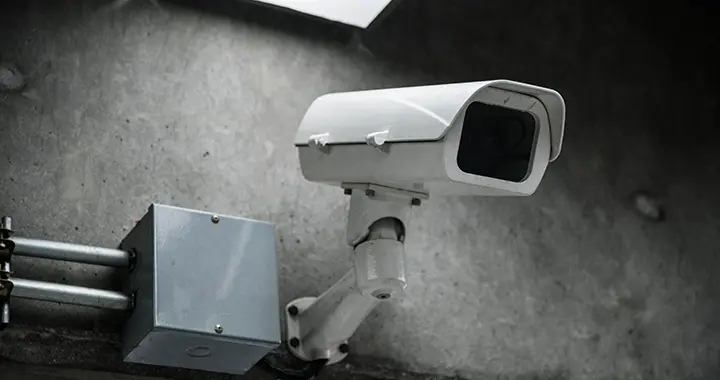
The same word, two opposite meanings depending on the sector: that is the trap of industrial Safety-Security. In private security, targets malicious acts and targets accidents. In the nuclear sector, it is exactly the reverse.
This confusion is not a vocabulary debate for specialists. It leaves risks without an owner, multiplies tools and slows incident response. For an industrial operator, it is paid in blind spots and scattered budgets.
Key takeaways
- Safety covers accidental risks; security covers deliberate, intentional malicious acts.
- In nuclear, defence and space, the terminology inverts and blurs reference frameworks.
- The Safety-Security confusion creates blind spots: a risk falls between two teams and is handled by no one.
- OT cybersecurity adds a third domain to align with physical safety and security.
- A Unified Control Center, or PSIM, converges safety, security and cyber into a single supervision layer.
Safety-Security: two notions that are complete opposites
Industrial safety protects people and installations against accidental, unintentional risks. Fire, workplace accident, technical failure or natural disaster: it prevents these events and limits their consequences. According to FIDUCIAL Sécurité, safety aims to prevent and limit unintentional events.
Industrial security protects against intentional, malicious acts. Intrusion, theft, sabotage, assault or terror attack: it detects, deters and neutralises a deliberate human threat. Where safety looks at the accident, security looks at hostile intent.
This distinction echoes the English pair safety and security, though it does not map word for word. In French, sécurité corresponds to safety and sûreté to security. Each domain mobilises different teams, standards and reflexes, which explains why this pair is so often poorly divided inside organisations.
Nuclear and defence: when Safety-Security terminology inverts
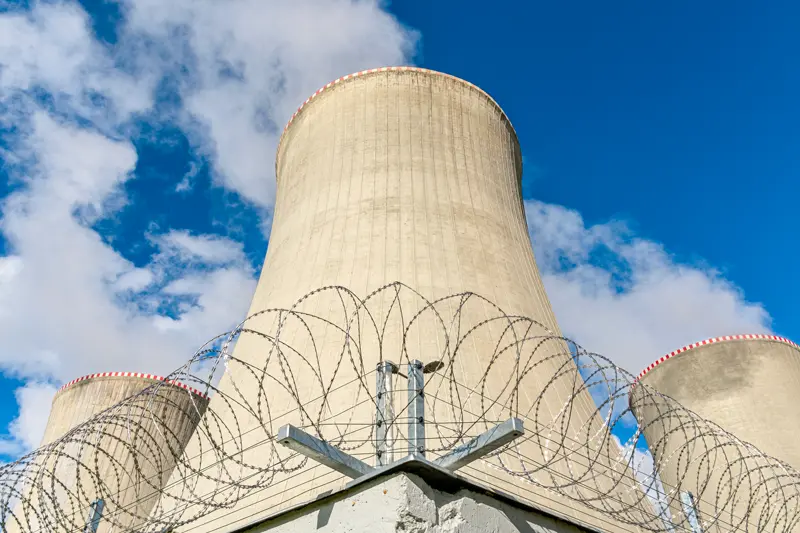
In the nuclear sector, the definitions flip and feed the confusion. According to the SFEN, nuclear sûreté refers to the technical measures that prevent accidents and limit their effects, precisely what other sectors call sécurité. Nuclear sécurité, by contrast, covers the fight against malicious acts, theft and sabotage.
Space and part of the defence sector follow the same inverted logic. A word takes on the meaning its counterpart carries elsewhere, so an operator active across several sectors handles this vocabulary with contradictory meanings from one site to another.
In practice, a manager running both a standard industrial site and a sensitive facility juggles two opposing reading grids. Without an explicit convention, a specification or a prevention plan can target one risk and cover another.
Why the Safety-Security confusion costs operators dearly
The confusion costs first through the blind spots it generates. When no one agrees on the border between accident and malicious act, a borderline risk falls between the safety team and the security team, and is managed by neither.
It costs next through duplicated resources. Two departments, two budgets and two platforms that do not talk to each other produce uncorrelated data. The operator pays twice for a view that ultimately stays partial.
It costs most during real incidents, because risks chain together. An intrusion falls under security, but if it starts a fire it shifts into safety. A cyberattack, a malicious act, can trigger a physical accident. Without a unified reading, the response arrives fragmented and late.
Converging Safety-Security and cyber in a Unified Control Center
A Unified Control Center reconciles these domains in a single operational supervision layer. A PSIM (Physical Security Information Management) platform aggregates access control, multi-vendor video monitoring, fire detection and BMS events, then correlates them in real time. The operator no longer sees silos, but a single, prioritised situation.
This convergence now integrates the cyber dimension. Protecting the supervision systems themselves against malicious acts falls under OT cybersecurity, a third pillar to align with physical safety and security. Relying on components certified CSPN by ANSSI (the French National Cybersecurity Agency) anchors this protection in a recognised framework.
A European leader in SCADA software and publisher of the Panorama platform for almost 40 years, present in critical sectors such as nuclear and defence, CODRA designs open, modular Unified Control Center solutions. The aim is simple: the Safety-Security distinction should serve risk control, not complicate it.
From definitions to risk governance
Clarifying this pair is not a semantic exercise, it is a risk-governance decision. Once the definitions are set and responsibilities assigned, the challenge becomes technical: correlating in a single supervision layer what accident, malicious act and cyber each threaten.
This is the role of the Safety-Security PSIM. To map your risks and unify your supervision, talk to the CODRA experts and discover our Safety-Security offer.