

Historian
Data is the gold of the 21st century.
Collecting, archiving and analyzing different datasets on a smart platform is no longer optional. Known as a historian, data historian or process historian, we take a look at what it can do for you.
Saving data related to the operation of a process and its environment is of course essential for post-event analysis and for optimizing plant operations. Space requirements to store this data can be very large. So, to scale up whilst contextualizing the data and at the same time addressing volume constraints, means a standard database just won’t do the job. Yet with perfectly organized and accessible operational data, operators and managers can be much more well informed, and therefore in a position to make decisions quickly that will improve productivity, quality and efficiency.
A Data Historian is a software solution that allows the user to replay entire process sequences, for instance to analyze a particular behavior. The datasets put into play are at once functionally coherent and technically different, which means they must be very precisely captured and recorded. Any types of data can be involved, including digital and analog values, information about alarms, aggregations and statistical calculations, as well as information about equipment and the quality of the running of the processes themselves.
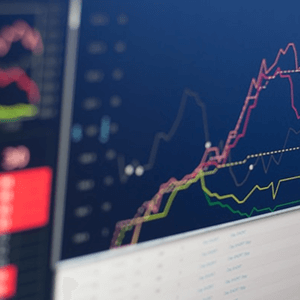
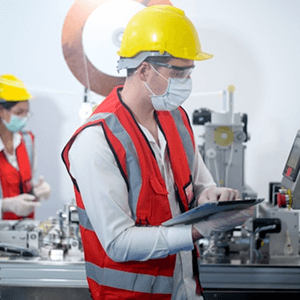
Furthermore, these recordings have to be picked up from a very different types of data sources, such as PLCs, DCSs, RTUs, proprietary interfaces on machines or measuring instruments and third-party computer systems as well as manually entered data. The dataset is stored chronologically on appearance or execution such as to reduce retrieval times to a minimum and to maximize data reliability. The concepts of timestamping and performance are therefore central to running a data historian as Panorama H2.
Correlating the information
For a data Historian, the primary requirement is to be able to correlate the data along a time-axis, according to the relevant base of each day, week, season or process followed. But the date must also be correlated in line with the team at the controls, the equipment in operation, the alarms that appeared, plus the time taken to acknowledge them, etc.
Plus largement encore, la corrélation est également applicable sur la composante géographique. C’est le cas pour l’analyse comparée de différentes installations, opérations ou par zones géographiques. Performance des installations selon leur secteur administratif, comparaison d’installations entre elles sur différentes périodes… Il devient alors possible de découvrir qu’un problème de production – à première vue peu important – et relevant d’un site en particulier peut mettre en difficulté toute la chaine d’approvisionnement et de production. De même, deux entités à priori parfaitement identiques, ont des rendements de productivité et des configurations très différents.
Très concrètement voici par exemple quelques questions auxquelles un puissant data Historian peut répondre :
- Combien de temps un équipement particulier a été en fonctionnement ces dernières 48h ?
- Quelle quantité d’énergie primaire a-t-elle été utilisée pour réaliser cette OF ?
- Quel volume, en mètre cube, a été produit ce matin et quelles sont mes disponibilités logistiques du jour ?
- Quelle a été la moyenne, le maximum et l’étendue des températures mesurées dans ma baie de serveur, mon data center, cet été ?
- Y a-t-il eu un impact significatif sur l’environnement suite à l’incident de la semaine dernière ?
La seule limite aux questions que vous vous posez sur le fonctionnement de vos installations repose sur la qualité, la quantité de vos données et votre imagination.
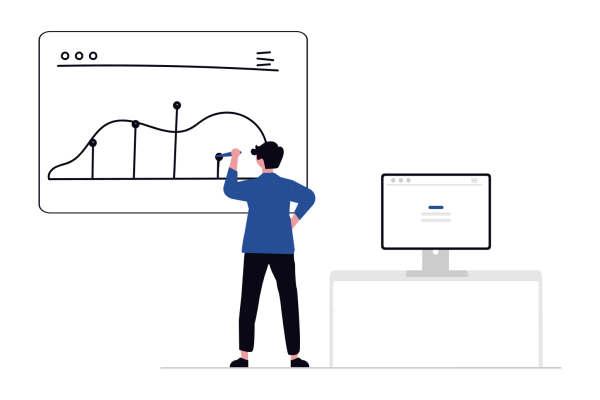
Benefits of a Data Historian
The many benefits of a Historian platform include:
- Redundancy features (store and forward, and fail-over),
- High speed data collection (tens of thousands of records per second),
- Efficient storage to optimize disk space without limiting performance,
- User profiles that take account the operator’s functional scope and the granularity of data they have access to.
Who uses a data Historian?
Industry is a major consumer of data. Data Historians are valuable for recording production data that can then be used to analyze/optimize processes (flow rate, valve position, temperature, pressure, etc.), productivity (operating time, number of faults, etc.), performance (number of units per hour, machine utilization, cumulative outages, etc.), traceability, quality and other cost management-related data.
A Historian is also key to analyzing the operation of heavy equipment and infrastructure. For example, it can record run times and all data related to proactive, preventive and predictive maintenance operations. The construction sector and utility companies producing, transmission and distribution of water and power can also make good use of a Data Historian. Uses include analyzing environmental data to produce detailed consumption reports and enabling action plans to be devised to improve energy efficiency and throughput.